


The Indexing Crisis: How to Fix "Discovered - Currently Not Indexed" for Shopify Stores in 2026

In 2026, the internet is facing a massive "Content Tsunami." With billions of pages published daily, Google has stopped trying to index everything. Instead, it has become highly selective. For Shopify merchants, this has resulted in a frustrating spike in the "Discovered - Currently Not Indexed" status within Google Search Console.
This status means Google knows your page exists, but it has decided that crawling and indexing it isn't worth the effort right now. It is a rejection based on Efficiency, not a bug.
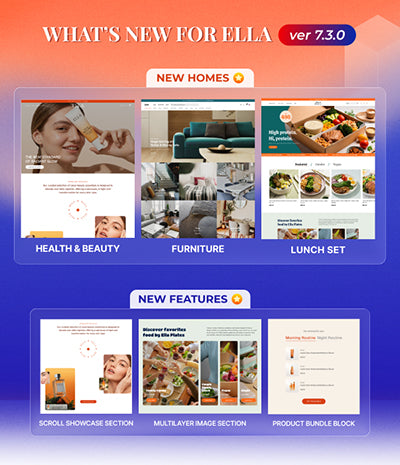
At Halothemes, we’ve optimized Ella Theme 7 to slash technical debt and "noise," giving your pages the best possible chance to be prioritized by Google’s crawlers.

1. Why Shopify Stores are Hitting the Indexing Wall
Shopify’s greatest strength—its ease of use—is often its greatest SEO weakness. Out of the box, Shopify can create thousands of "junk" URLs that drain your Crawl Budget:
-
Filter/Tag Pages: /collections/all/tag-name
-
Vendor/Type Links: /collections/vendors?q=BrandName
-
Duplicate Product URLs: Products indexed under both /products/name and /collections/name/products/name.
When Google sees 5,000 tag pages with zero unique content, it flags your site as "Low Quality," and your real product pages get stuck in the "Discovered" queue.
2. The "Crawl Budget" Audit: Stopping the Leak
Google only allocates a limited amount of time to your site. If that time is spent on 404 errors or duplicate filters, your new arrivals will never see the light of day.
The Fix:
-
Edit your robots.txt: Use Shopify’s native robots.txt.liquid to disallow crawl access to tag combinations (/collections/*/*) and search pages.
-
Canonicalization: Ensure your theme uses the Direct Product URL instead of the collection-based URL. Ella Theme handles this natively, ensuring Google only sees one "Source of Truth" for every product.
3. Internal Linking: The "Orphan Page" Problem
Google finds pages via links. If a product is buried deep in your architecture (e.g., more than 4-5 clicks away from the homepage), Google assumes it isn’t important.
The Ella Strategy:
Use Visual Mega Menus and Featured Collection sections to keep your most important products within 2 clicks of the homepage. A strong, shallow internal linking structure signals to Google that a page is "High Priority."
4. Improving Quality with Clean Code
In 2026, Google uses site performance and "Technical Health" as a proxy for quality. If your theme is bloated with heavy, unoptimized code, Google will deprioritize your indexing.
|
Feature |
Impact on Indexing |
Halothemes Advantage |
|
DOM Size |
Large DOM = Slower Crawling |
Lightweight Liquid Architecture |
|
Structured Data |
Helps Google "understand" content |
Built-in JSON-LD Schema |
|
Mobile UX |
Primary indexing factor |
By using a high-performance engine like Ella, you reduce the technical "friction" that causes Googlebot to give up on your site.
5. The "Manual Nudge": Google Indexing API
For time-sensitive products, such as those launched for BFCM 2026, you can't always wait for Google to find you. You can use the Google Indexing API via third-party tools to "ping" Google directly.
Warning: Only use this for your most valuable, original pages. Pinging "junk" or duplicate pages will only damage your overall domain authority.

CONCLUSION: PROVE YOUR VALUE TO GOOGLE
The "Discovered - Currently Not Indexed" crisis is Google’s way of telling you that your site’s technical efficiency needs an upgrade. By cleaning your robots.txt, shortening your internal link paths, and using the high-performance Ella Theme 7, you prove to Google that your store is worth the crawl.
Stop being a "Discovered" store. Become an "Indexed" authority.